


 Du Lun au Ven - De 9h à 18h
NEW TAX ON PATRIMONIAL HOLDING COMPANIES
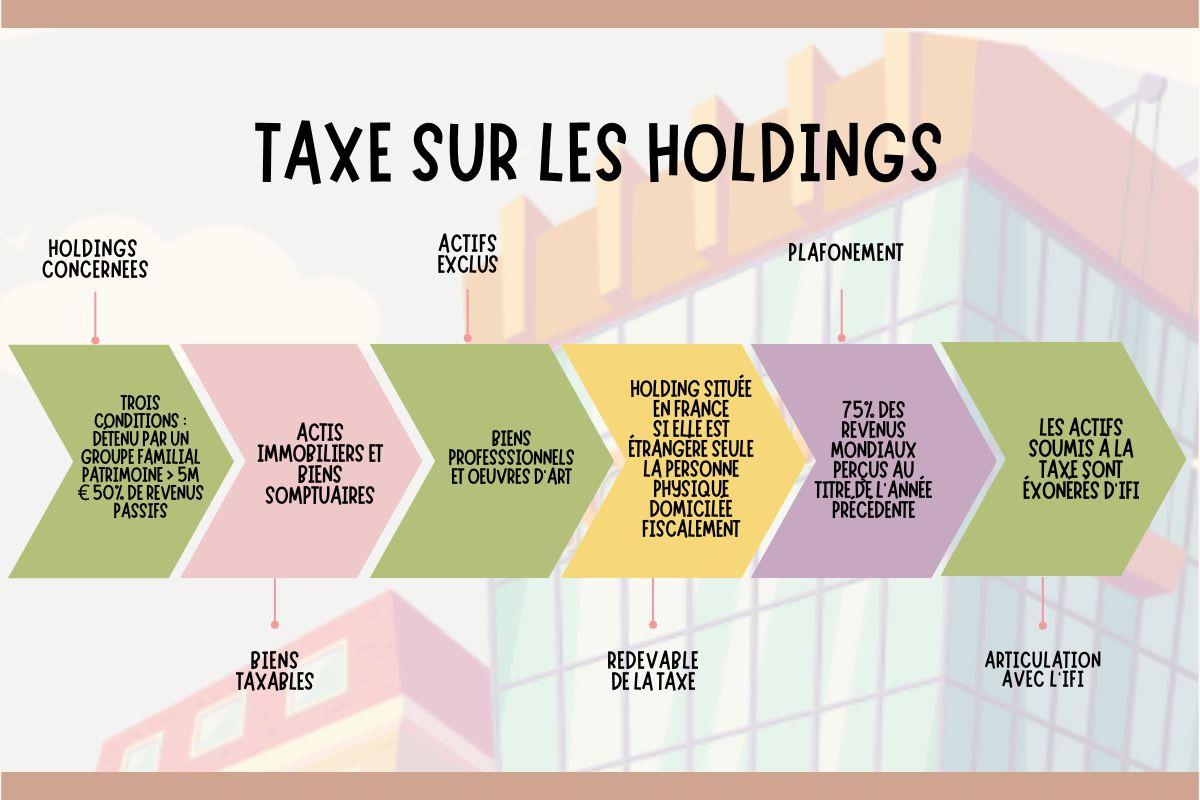
An annual tax of 20%, assessed on the market value of certain non-business assets held by patrimonial holding companies, has been introduced under Article 235 ter of the General Tax Code (Article 7 of the Finance Act for 2026). The measure was adopted and upheld by the Constitutional Council on 19 February 2026. It is, first and foremost, a supplementary instrument within the existing anti-avoidance framework, and nothing more.
Holding Companies in Scope
The tax targets exclusively French companies that cumulatively satisfy three criteria:
- being majority-owned by a family group;
- holding assets whose aggregate market value exceeds €5 million, across all asset classes (financial, real property, etc.), and not solely those falling within the tax base;
- carrying on a predominantly patrimonial activity, characterised where more than 50% of income qualifies as passive income.
Taxable and Excluded Assets
The scope of the tax covers real property assets not allocated to an operational activity and so-called “sumptuary assets”. This includes, for example, assets used for hunting or fishing, private motor vehicles, yachts and pleasure craft, dwellings in respect of which the controlling natural person reserves the right of enjoyment, and dwellings occupied rent-free or let at an abnormally low rent.
Dividends, interest, rents, royalties, proceeds from the disposal of assets or intellectual property rights fall within this category, unless they arise from centralised group treasury management, in which case they are expressly excluded.
By contrast, assets genuinely allocated to an industrial, commercial, craft, agricultural or professional activity are wholly or partially excluded from the taxable base. Cash holdings are expressly excluded.
Amount of the Tax
The tax is calculated on the market value of the relevant assets at a flat rate of 20%. French holding companies are directly liable for the tax, which is not deductible from their taxable income for corporate income tax purposes.
Since the new tax may accumulate with the real property wealth tax (impôt sur la fortune immobilière – IFI), the legislature has provided that assets subject to the 20% tax are exempt from IFI in respect of the financial year ended before the relevant 1 January.
How to Prepare
The tax applies to financial years ending on or after 31 December 2026, leaving the affected holding company several months to achieve compliance.
The first step will therefore be to:
- map precisely the assets held by the holding company;
- assess their use and the conditions of that use;
Following that analysis, it will be possible to identify assets likely to fall within the scope of the tax.
Only then may options such as the disposal of assets from the holding company, their reallocation to a business activity, or adjustments to the terms of their use be considered in order to mitigate exposure to the tax.
Administrative guidance (BOFIP) has not yet been published. The filing procedures for holding companies and certain points of interpretation remain to be confirmed.